the guide
The Resort Allotment
thirteen things you can put in the ground, seventeen rows to put them in, and one rule that decides the shape of the whole feature: nothing dies while you are away.
the point of it
a second income, and a reason to walk back
a field you plant and forget is a vending machine with a delay on it. a field that grows faster when you come by is a place — and coming by is a skate across the resort, which is the game.
so the allotment is built around one decision, and everything else follows from it. an unwatered day is simply not credited. the crop does not die, it does not wilt, and it does not go backwards: it is waiting exactly where you left it whenever you come back, and ripe produce keeps in the ground indefinitely.
the island's day is twenty real minutes. three days is an hour. a crop that died after three unattended days would convert the farm into a leash — you would come back from the best hour you had all week and be shown a dead field and told it was your fault. that is a punishment for playing the game.
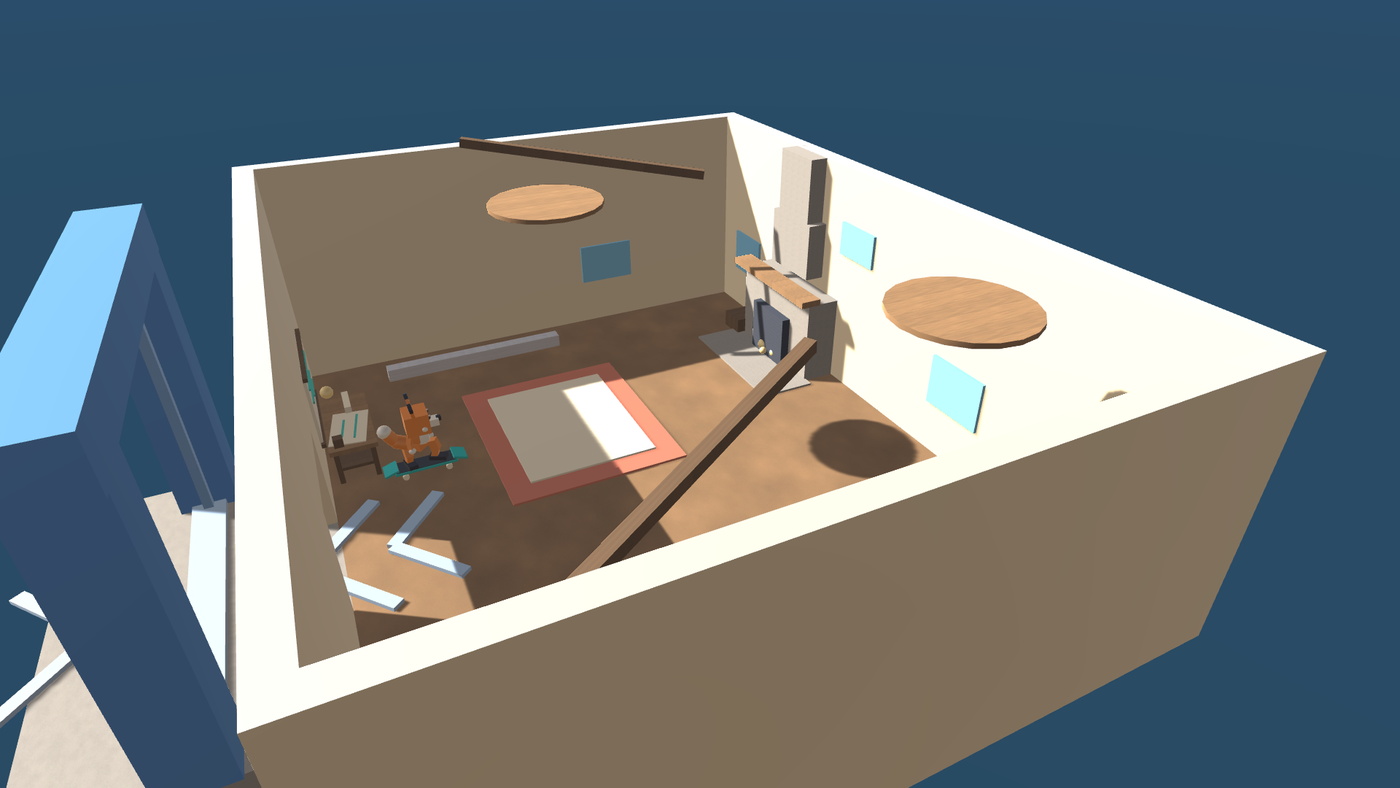
there is no hunger bar and there never was. nothing here drains and nothing here punishes. food is a new way up the rest ladder the game already had, and not a new way down. a player who never eats anything is in exactly the position they were in yesterday, which is the test this had to pass.
the seed shelf
thirteen crops, seven you can eat
the five flowers are for giving and for selling, and one of them is a perennial that pays like a thoughtful present every two days once it is established. the pumpkin is food and is also the size of a chair, so it is not eaten either.
wide table — scroll it sideways for the rest of the columns. tap a crop's name for what it is actually like.
| crop | kind | seed | days | again | yield | each | coins / day | settled | rested | as a present |
|---|---|---|---|---|---|---|---|---|---|---|
| food | 15 | 1 | — | 3 | 16 | 33 | — | +6 | everyday | |
up before you are. peppery about it. one day in a row of dirt and it is done. the starter crop, and the only thing on the shelf that pays out the same island day you plant it — which is why it is the one you are handed first. snaps. that is the whole review. | ||||||||||
| food | 25 | 2 | every 2 | 3 | 24 | 24 | 36 | +8 | everyday | |
wants the light and nothing else. stays in the ground. the workhorse once it is established: the vine stays in and comes round again every two days, so the seed is paid for once and the row keeps working — the cheapest seed on the shelf that turns into a permanent row. warm off the vine, which is not the same fruit as a cold one. | ||||||||||
| food | 35 | 2 | every 2 | 2 | 30 | 13 | 30 | +7 | everyday | |
the rangers put it in by the trailheads. it spread. cut it back and it comes again. the park clearing keeps a couple of rows of it for exactly the reason in its own catalogue line. rub it and your hands smell like the trail for an hour. | ||||||||||
| food | 30 | 3 | — | 3 | 35 | 25 | — | +14 | everyday | |
three rows or none. it does not like being the only one. three watered days, and then all at once. the best rested-per-item of anything you can eat without spending a whole afternoon on it. sweet enough raw. cooking it is a whole opinion. | ||||||||||
| food | 55 | 3 | every 2 | 3 | 32 | 14 | 48 | +10 | everyday | |
low, greedy, and worth it. an expensive seed and a slow start that turns into one of the two best rows on the island once the crown is in and fruiting every two days. the small ones are the good ones. nobody believes that until. | ||||||||||
| food | 40 | 3 | every 2 | 3 | 34 | 21 | 51 | +9 | everyday | |
planted on the mountain road because it liked the heat off it. the bush stays in and keeps setting. the highest settled rate of anything in the everyday band, and a cheaper seed than the strawberry to get there. hotter than it looks. it looks quite hot. | ||||||||||
| food | 60 | 4 | — | 1 | 150 | 23 | — | +22 | thoughtful | |
one melon a vine. the vine has made its decision. four watered days for the one, and it lands as a thoughtful present rather than an everyday one — so it is the cheapest way on the island to turn four quiet mornings into somebody's good day. it also carries the biggest rest gain of anything edible. one melon. it took four days and it knows. | ||||||||||
| food | 70 | 5 | — | 1 | 400 | 66 | — | — | treasured | |
takes the whole row and five days and is not sorry. the best rate in the table, and the only treasured gift in the game that can be grown. six of the other seven treasures are afternoons you have to go and spend somewhere; this one is a fortnight of small mornings. same price, different currency. it does not stack past one, like every treasure, so two presents is two trips. and it is not edible — letting somebody eat a four-hundred-coin trophy by pressing the wrong key is not a mechanic, it is a trap. the size of a chair. you will need both arms and a plan. | ||||||||||
| flower | 20 | 2 | — | 2 | 22 | 12 | — | — | everyday | |
the colour of the awnings, which was not an accident. two watered days and it is loud. the cheapest seed on the shelf after the radish, and the worst rate on it — flowers are not a living. orange in a way that argues with the terracotta and wins. | ||||||||||
| flower | 30 | 2 | — | 2 | 28 | 13 | — | — | everyday | |
shuts at dusk and opens again without being asked. two watered days on any dry ground, and it genuinely does open and shut on the island's own clock. shuts at dusk. opens again. asks nothing of anybody. | ||||||||||
| flower | 35 | 3 | every 2 | 2 | 26 | 6 | 26 | — | everyday | |
salt does not bother it. very little does. the worst first cycle on the shelf and a perfectly respectable row once it is cut and coming back. cut it and it comes back. dries without losing the colour, which is a rare trick. | ||||||||||
| flower | 45 | 4 | every 2 | 1 | 95 | 13 | 47 | — | thoughtful | |
a cutting, really. it will be over the wall by the weekend. the cane stays in and climbs — a thoughtful present off a perennial, every two days, forever, for one forty-five-coin seed. if you give presents at all, this is the row that pays for it. the pink is not the flower. the flower is the small white bit. | ||||||||||
| flower | 90 | 4 | — | 1 | 170 | 20 | — | — | thoughtful | |
the expensive tuber. it knows. four watered days for the one head, and the priciest seed on the shelf. it is a present you decided to give four days ago. counted its own petals once and lost track, like everyone. | ||||||||||
reading the two rate columns
coins / day is the first cycle, net of the seed: what one row hands you per island day counting the seed you paid and the days you waited for the first harvest. it is the honest number for a crop you plant once.
settled is what the six regrowers are worth per island day once the plant is in and coming round on its own. the seed is already paid for, so the whole harvest is profit and the clock is the regrow rather than the full grow. it is the number that matters if you are going to keep the row.
the seven crops with no regrow have no second number, because for them the two are the same.
where the values sit
crop values sit inside the gift shelf's existing bands rather than between them — everyday 12 to 35, thoughtful 90 to 190, treasured 380 to 900 — because a shop with two pricing schemes on it is a shop nobody can read.
and the produce is a real item on that shelf: a tomato you grew is the same object as a tomato you found, so it can be carried, given, sold, or eaten with no special case anywhere.
the ground
seventeen rows, in four places somebody already had a reason to stand
| where | rows | what is there | why there |
|---|---|---|---|
| the field | 8 | a fenced field with a shed, a scarecrow, a water butt and its own seed stand at the gate | on the foothill collar, north-east, where the flat ground runs out and the mountain starts. it is the last flat thing before the range, which is where a field would be — and you roll onto it off the top terrace's lawn without a step anywhere. |
| your yard | 4 | four rows along the south of the fox den's lawn | inside your own fence, clear of the flower beds, the birdbath and the lantern — and deliberately colliderless, so build mode can still put furniture anywhere on the lawn, including on top of them. |
| the marketplace | 3 | three rows on the west lawn behind the stalls, with a seed rack of their own | the market is where produce goes. three rows behind the stalls is the shortest true sentence about that. |
| the park clearing | 2 | two rows inside the national park's dirt loop, by the picnic tables | ridge sage's own catalogue line says the rangers put it in by the trailheads and it spread, so the park keeps a couple. |
two seed counters, and that is on purpose. the stand at the field's gate and the rack in the marketplace sell the same thirteen packets at the same prices, and neither one moves a coin itself — they both ask the same single system. without the second one, four rows in your own back garden would be gated behind a hike up the north approach every time you wanted a different seed.
a row's crop is saved under the row's own hand-written id, never under an index into anything that could be reordered. renaming a row would lose whatever was growing in it, so nothing ever renames one.
the clock
watered days, not elapsed days
a crop ripens after a number of watered days
not a number of days that went past. the row counts the days it had water, by rain or by hand, and the plant wants however many it wants. skip a day and you lost a day of growth. that is the entire cost of neglect, and there is no other one.
seeds go in wet
the day you plant counts as a watered day. you are not asked to plant something and then immediately water the thing you just planted.
rain waters every outdoor row, free
the island already rolls clear, overcast and rain, and that roll already drives fishing and the rare sighting windows. a rainy day is now a free day of growth for every row on the island. a player who never touches a row still farms. they farm slowly, which is the correct difference.
one press per row, or one press at the barrel
there is no watering can, no water meter, no well to walk to and nothing to refill — a can with twelve charges in it would be the chore, not the watering. and the water butt in the field waters every thirsty row on the island in one press, from where you can see what you are watering.
the island's own day is the only timer
nothing in the growth code reads real time. the only thing that moves a crop forward is the island's day turning over — and that day count persists, exactly as the moon and the tides do, so a crop cannot be rerolled by quitting either.
it does not die, it does not wilt, and it does not go backwards. it simply did not grow that day.
a harvest you have no room to carry leaves the row standing rather than destroying anything. produce never rots in the ground. there is no timer on food in your bag, no spoilage, no penalty for carrying something you never eat, and no moment at which the game asks you for a sandwich.
eating
food feeds the rest ladder, and that is the whole mechanic
the resort already had a rest ladder, and the skate controller already read it. a food crop adds to it. no second meter was invented, and the HUD never grows a new timer.
| rest | state | what it does |
|---|---|---|
| 70+ | well rested | tricks score ten percent more, and one more unit of top speed |
| 25 – 69 | fine | nothing |
| under 25 | sleepy | one and a half units off your top speed |
the ceiling is 85, and a bed still beats a sandwich
eating tops you up to eighty-five and no further; a night in the den is what takes you to a hundred. two reasons, and the second is the real one: a bag of radishes should not retire the bed, and eating at the ceiling would silently destroy the thing you ate. a twenty-four-coin present is not something the game gets to eat on your behalf — so at the ceiling the fox simply does not eat it, says so, and you still have it.
why not just make it a weak power-up
because a weaker cola boost is a cola boost. the brief was a gentler, longer, cheaper cousin of the seven power-ups, not an eighth pickup, and those three words point straight at the rest ladder.
same axis, two orders of magnitude apart in both directions. a player who eats before a trick line set themselves up; a player who pops a power-up spent something.
the year
fourteen-day months, seven of them, ninety-eight days to the year
the date is a pure function of the island's day count. there is no second clock and nothing about the date on the save, so there is nothing that can drift out of step with the island's own time. delete the calendar and the island keeps perfect time.
opening
days 1 – 14
crossing
days 15 – 28
bunting
days 29 – 42
longstay
days 43 – 56
lanterns
days 57 – 70
repairs
days 71 – 84
turnover
days 85 – 98
why fourteen
because founders day already ran every seventh day, and any month length that is a multiple of seven pins that holiday to the same dates forever — here, the seventh and the fourteenth of every month, in every year, for as long as the island runs. a thirteen-day month would have let the resort's one standing holiday wander across the planner, which is how you end up with two calendars arguing.
seven months because this game counts in sevens, and because seven against thirty-four residents lands where it needs to. all thirty-four have a birthday, no two share one, and no month is empty — that is one every 2.88 days, or roughly one an hour of real play, so the feature shows itself inside a first session while any one resident's day stays genuinely annual.
and they are not seasons
the month names are labels, not forecasts. the island already has weather, and weather is what a crop answers to. a second system that also decided what grows or what falls out of the sky would fight the one that already works, and the loser would be the player trying to work out which of them killed the pumpkins.
a month of 14 days is 4 hours 40 minutes of play. a year of 98 is 32 hours 40, or fourteen weeks exactly.
nothing branches on a month. nothing may. if a month ever needs to change the world, it is a season, and the answer is no.
the economy
a second income, not a replacement
eight rows of pumpkins is about 530 coins per island day — per twenty real minutes — against a bucket of ordinary fish at 150 to 250. roughly two buckets for eight button presses and a five-day wait.
that is in line rather than ahead, which was the bar. nothing on this page beats going fishing by enough to make fishing pointless.
| what | coins | notes |
|---|---|---|
| eight rows of pumpkins | ~530 | per island day, at steady state |
| a bucket of ordinary fish | 150 – 250 | the journal is here |
| a route trainer's purse | 100 – 250 | once each, and there are about two hundred of them |
| a fox duel | 150 | post-game, repeatable |
| canvas daypack — 10 slots | 250 | the first backpack |
| resort pack — 15 slots | 600 | |
| outfitter's haul — 20 slots | 1200 | the last one |
the bulk till refuses to sell anything treasured, and says so
the sell-everything button at the stand handles the everyday haul and leaves the good one alone. a treasured crop is an afternoon's errand and somebody's loved present — selling one by accident is not a trade, it is a loss.
and it distinguishes an empty bag from a bag holding only the good stuff, because otherwise the refusal reads as a bug to somebody standing there with a pumpkin: "only the good stuff in there. that one goes by hand."
coins, gems and style points — what each of the three actually buys →
two things that are not right yet
two honest notes
the numbers were balanced against a twelve-minute day
every rate on this page was set against an island day of twelve real minutes. the clock is now twenty. the numbers were left exactly as authored rather than quietly re-scaled, because a silent re-tune is how a balance pass becomes unreviewable — the whole table would have moved and nobody would have been able to say against what.
what it means in practice: a row earns the same coins per island day and an island day is longer, so the farm is slower in real time than the day it was tuned for. it is a known number waiting on a playtest rather than a mystery.
the residents do not have opinions about the crops yet
presents are a real system: every resident has one thing they love and one thing they cannot stand, and everything else lands somewhere on a scale. the thirteen crops arrived after that table was written, so twelve of the thirteen currently land as a polite neutral — the fox takes it, says something unbothered, and the friendship moves by the default amount.
that is fixable in an afternoon by assigning them at random, and it is not going to be. giving thirty-four characters real opinions about thirteen new objects is authorship, not a patch, and doing it badly would be worse than the neutral.
both of these are the kind of thing a page like this normally leaves out. they are here because a guide that only lists the good numbers is not a guide.
the list
tell me when it ships
one email, when there is something to play. no newsletter, no schedule, nothing else, ever.